
Top M8 Connector Types for Industrial Applications and Their Benefits?

M8 connectors are essential components in industrial applications, playing a critical role in ensuring reliable connections in demanding environments. According to the latest market research report by Grand View Research, the global industrial connector market is projected to reach $9.81 billion by 2026, highlighting the significant demand for durable and efficient connection solutions. M8 connectors provide excellent performance in various sectors, including automation, robotics, and transportation.

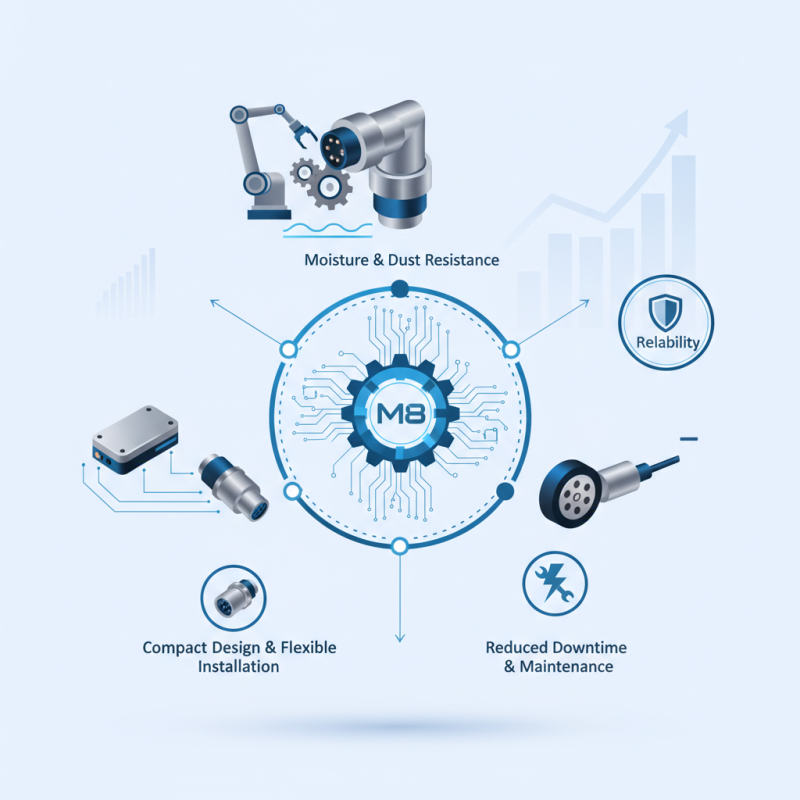
The compact design of M8 connectors allows for flexible installation in tight spaces. Their robust construction ensures resistance to harsh conditions, such as moisture and dust. A recent study by MarketsandMarkets emphasizes that M8 connectors contribute to reducing downtime and maintenance costs, as they offer robust mechanical and electrical stability. Nevertheless, choosing the right type of M8 connector can be challenging, given the wide range of options available.

While many manufacturers promise compatibility and reliability, some M8 connectors may fall short in terms of durability under extreme conditions. This inconsistency raises concerns among users who rely on these components in critical applications. Exploring the top M8 connector types can reveal the best options and their unique benefits, guiding customers toward making informed decisions.
Top M8 Connector Types for Industrial Applications and Their Benefits?

Top M8 Connector Types Used in Industrial Automation Applications
Top M8 Connector Types for Industrial Applications and Their Benefits?

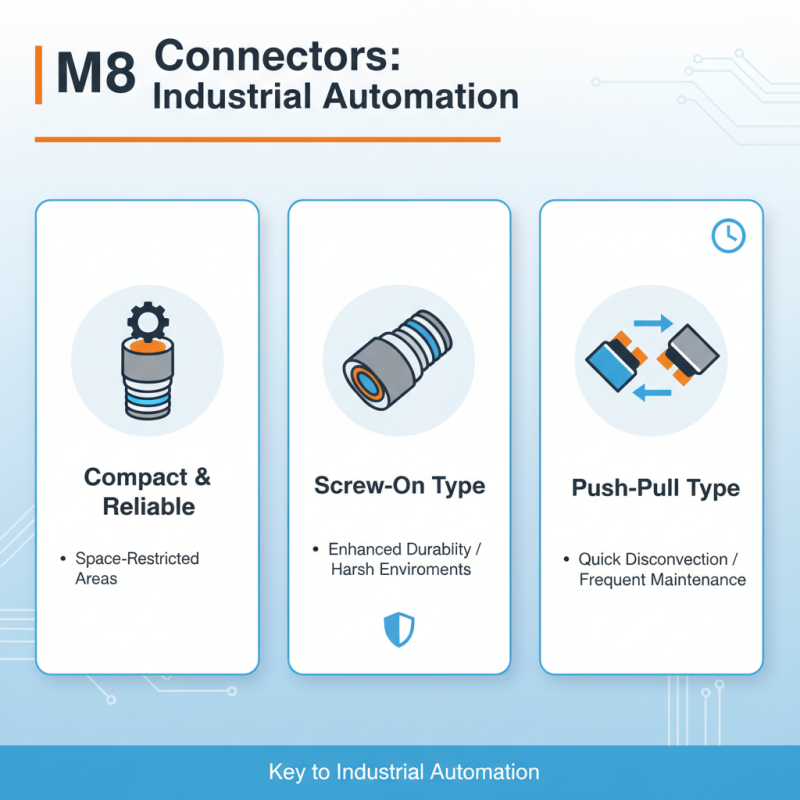
M8 connectors play a crucial role in industrial automation. They are compact and reliable, making them ideal for space-restricted areas. Different types of M8 connectors serve various purposes. For example, the screw-on type offers enhanced durability in harsh environments. Another option is the push-pull connector, which allows for quick disconnection—ideal for frequent maintenance.

When selecting M8 connectors, it’s essential to consider factors like cable length and environmental conditions. Choosing the right connector ensures optimal performance. In harsh settings, connectors with IP67 ratings provide excellent protection from dust and moisture. These connectors maintain signal integrity even in challenging situations.

**Tip:** Always check compatibility with existing systems. Mismatches can lead to costly downtime.

For those new to M8 connectors, the array of options may feel overwhelming. It's worth examining the specific needs of your application before purchasing. Sometimes, the cheapest option may result in poor performance. Take time to evaluate the long-term benefits of quality connectors.

**Tip:** Consult with experts if you feel unsure. Making informed decisions can save time and resources.

Key Benefits of M8 Connectors in Harsh Industrial Environments

M8 connectors are gaining popularity in industrial applications. They are durable and designed for tough environments. These connectors are compact, which saves space in machinery. According to industry reports, the demand for M8 connectors is growing, driven by automation trends. They are ideal for sensors and actuators in various industries.

In harsh environments, M8 connectors offer several advantages. They are resistant to dust and moisture. This makes them suitable for factories and outdoor equipment. A recent study found that over 60% of production downtime is due to cable failures. Using M8 connectors can reduce this risk significantly. Their robust construction helps ensure a reliable connection, even in extreme conditions.

Furthermore, their ease of installation is beneficial. Quick-release features can save time during maintenance. However, improper connections can lead to issues. Ensuring correct installation is essential for optimal performance. Data suggests that a well-designed connector can enhance system efficiency by up to 30%. M8 connectors represent both reliability and innovation in industrial applications.

Top M8 Connector Types and Their Benefits in Industrial Applications

Comparison of M8 Connector Specifications: IP Ratings and Contact Types

M8 connectors play a crucial role in industrial applications, especially in automation and control systems. A vital aspect of these connectors is their IP ratings. The Ingress Protection rating indicates how well a connector can withstand dust and moisture. Common ratings for M8 connectors include IP67 and IP68, with IP67 being waterproof for temporary submersion.

Some experts suggest that IP67 connectors are sufficient for most environments. However, in highly humid settings, IP68 could be necessary. Contact types also vary, and the common configurations include 3, 4, or 8 pins. Each configuration holds specific advantages. For instance, a 3-pin connector is often used for simple sensor connections, while 8-pin connectors allow for complex data and power supply requirements.

Tip 1: Always confirm the specific IP rating needed for your environment. It's essential to avoid overestimating the level of protection your application requires.

Tip 2: Evaluate the contact types offered. Ensure they align with your voltage and current needs.

While many benefactors highlight the robustness of M8 connectors, reflections on their potential downsides exist. Improper installation can lead to failures, emphasizing the importance of careful handling. Seeking proper training and resources can significantly reduce mistakes. Adapting the right specifications is imperative for successful integration.

Trends in M8 Connector Adoption for Smart Manufacturing Solutions

The adoption of M8 connectors in smart manufacturing is rising. These connectors are compact yet robust. They can handle harsh environments and are ideal for sensors and actuators. Many manufacturers are shifting towards these connectors due to their reliability.

With the push for automation, M8 connectors offer versatility. They are used in various applications, from robotics to data transmission. As factories get smarter, the need for quick connections grows. However, integration can be challenging. Sometimes the connectors may not fit perfectly in existing systems, causing delays.

Trends indicate a move towards modular designs. This will allow easier upgrades in the future. Users often face difficulties choosing the right connector type. Variations in specifications can lead to confusion. It’s essential to evaluate needs carefully.

This evolution reflects the industry's growing focus on connectivity and real-time data. As technology evolves, staying informed is key.

Future Outlook: Innovations in M8 Connector Technology for Industry 4.0

The industry is evolving rapidly with the push towards Industry 4.0. M8 connectors are pivotal in this transformation. They provide reliable connections in smart factories and automation systems. Their robust design allows for seamless data transmission in harsh environments. This ensures equipment operates efficiently, increasing productivity.

Recent innovations focus on miniaturization and enhanced performance. Smaller M8 connectors can fit into tighter spaces without sacrificing durability. They are more adaptable to various applications, from sensors to actuators. However, as design becomes more compact, manufacturing challenges arise. Achieving precision at such small scales may lead to inconsistencies.

Wireless communication is another area for M8 connectors. Trying to implement this technology raises questions about reliability. Eliminating wired connections could simplify installations but increase risks. The industry must find a balance between innovation and functionality. Continued research is essential to overcome these hurdles. The future of M8 connectors will largely depend on these advancements and the industry's responsiveness to evolving needs.